

Can Dogs See UV Light? The Hidden World Your Dog May Be Seeing
Many pet owners know dogs have an incredible sense of smell, but did you know dogs see UV light, or
Order before 3pm and we ship the same day
Your cart information will not be stored on our servers
Take advantage of our multibuy discounts
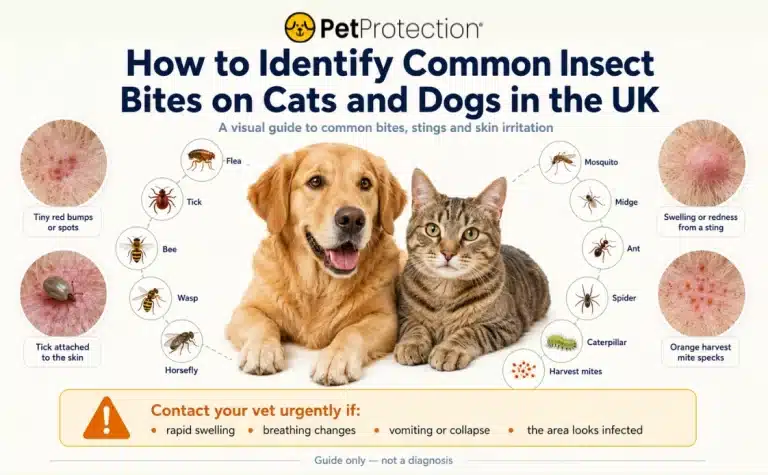
Insect bites on dogs and cats are common in the UK, especially during spring, summer and early autumn. Not every lump, red patch, scab, or itchy spot on your pet is the same. In the UK, cats and dogs can be affected by a variety of bites and stings, especially during spring, summer, and early autumn when insects and parasites are more active. Some bites are mild and settle quickly, while others can become painful, infected, or trigger an allergic reaction.
As a pet parent, it can be worrying to find a sudden swelling, red bump, or sore area on your cat or dog. This guide explains the most common bites and stings seen in UK pets, when your pet is most at risk, what each one may look like, and what you can do to help keep your pet comfortable.
This guide is for general information only and should not replace veterinary advice. If your pet is in pain, swelling quickly, struggling to breathe, vomiting, collapsing, or the area looks infected, contact your vet immediately. PDSA advises urgent veterinary help if a pet shows signs of an allergic reaction such as rapid swelling, breathing difficulty, collapse, vomiting, or diarrhoea after a bite or sting.
Cats and dogs explore the world with their noses, paws, and mouths. This means they are often bitten or stung on the face, lips, nose, paws, ears, belly, or legs. Some pets may only show mild redness or itching, while others may lick, chew, scratch, limp, shake their head, or seem unusually restless.
Identifying the likely cause can help you decide what to do next. Fleas may require household control as well as pet treatment. Ticks need careful removal. Bee and wasp stings may need monitoring for swelling or allergic reactions. Other bites may look harmless at first but worsen if your pet scratches or licks the area repeatedly.
A bite or sting may appear as:
Many skin problems can look similar, so it is important not to assume every red mark is a bite. Allergies, infections, mites, wounds, grass seeds, and other conditions can also cause irritation.
Fleas can be a problem all year round in the UK, especially because central heating allows fleas to survive indoors during colder months. However, many pets are at greater risk during spring, summer, and early autumn, when warmer conditions help flea populations grow more quickly. Fleas can jump a long way for their size, approximately 150 to 200 times their body length, that equates to 20cm (8 inches) vertically and 30-48cm (12-19 inches) horizontally.
Indoor cats, outdoor cats, dogs, rabbits, and multi-pet households can all be affected. Even pets that do not go far from home can pick up fleas from other animals or from the environment.
PDSA explains that fleas are common, irritating, and can lead to skin problems, allergic skin disease, and in some cases anaemia. They also note that most of a flea problem exists in the home environment, not just on the pet.
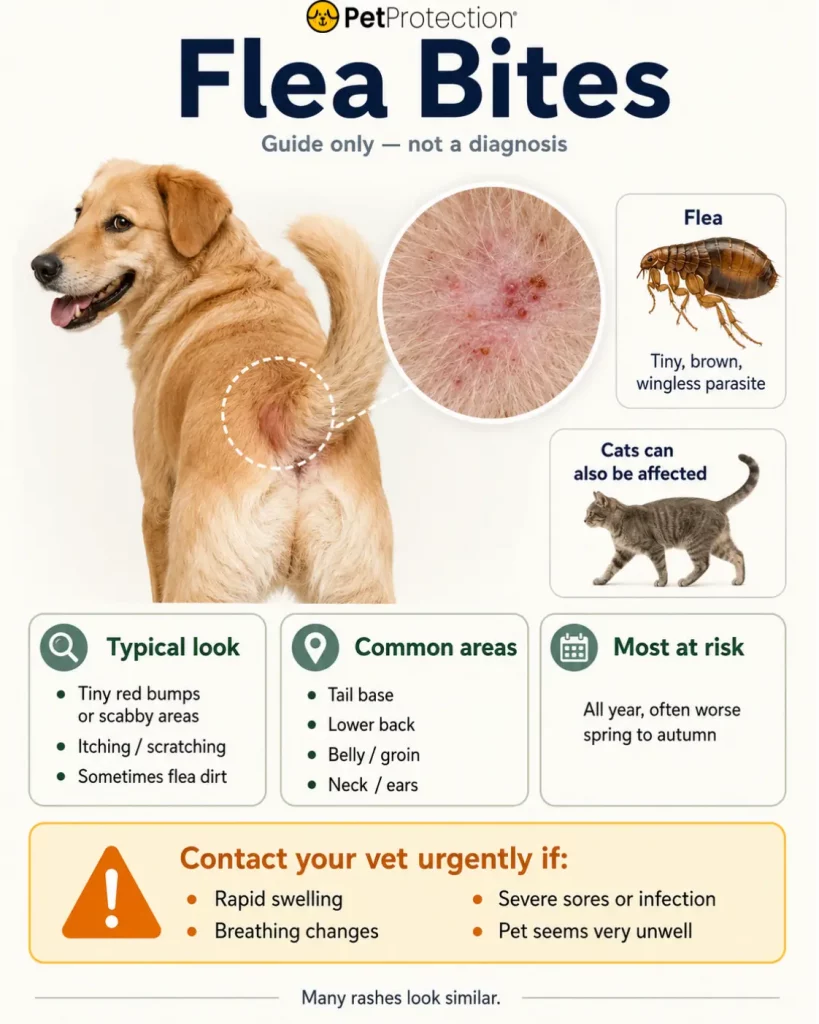
Flea bites often appear as tiny red bumps or scabby areas. They are commonly found around:
Some pets develop flea allergy dermatitis, where they react strongly to flea saliva. In these cases, even a small number of bites can cause intense itching, hair loss, broken skin, and scabs.
You may also notice “flea dirt”, which looks like tiny black specks in the coat. If placed on damp white tissue, flea dirt may turn reddish-brown because it contains digested blood.
If you suspect fleas, speak to your vet or use a licensed flea product that is suitable for your pet’s species, age, and weight. Never use a dog flea treatment on a cat unless your vet specifically advises it, as some dog products can be dangerous to cats.
You should also wash pet bedding, vacuum thoroughly, and treat the home environment if needed. PDSA recommends regular flea prevention, checking for flea dirt, vacuuming, and washing bedding at 60°C or hotter where possible.
If your pet has sore skin, hair loss, open wounds, heavy scabbing, or the itching does not improve, arrange a vet appointment. Your pet may need treatment for inflammation, infection, or flea allergy dermatitis.
Ticks are usually most active in the UK from March to October, with risk often increasing in warmer, humid weather. However, pets can pick up ticks at any time of year, particularly during mild winters. RSPCA states that peak tick season is from March to October, although animals can pick up ticks all year round.
Pets are most at risk after walking or roaming in:
Dogs are often more exposed because of walks, but cats can also pick up ticks, especially if they hunt, roam, or pass through long vegetation.
A tick often looks like a small, dark, rounded lump attached to the skin. As it feeds, it may become larger and paler or greyish. Ticks are commonly found around:
After a tick is removed, the bite site may be slightly red or raised for a short time.
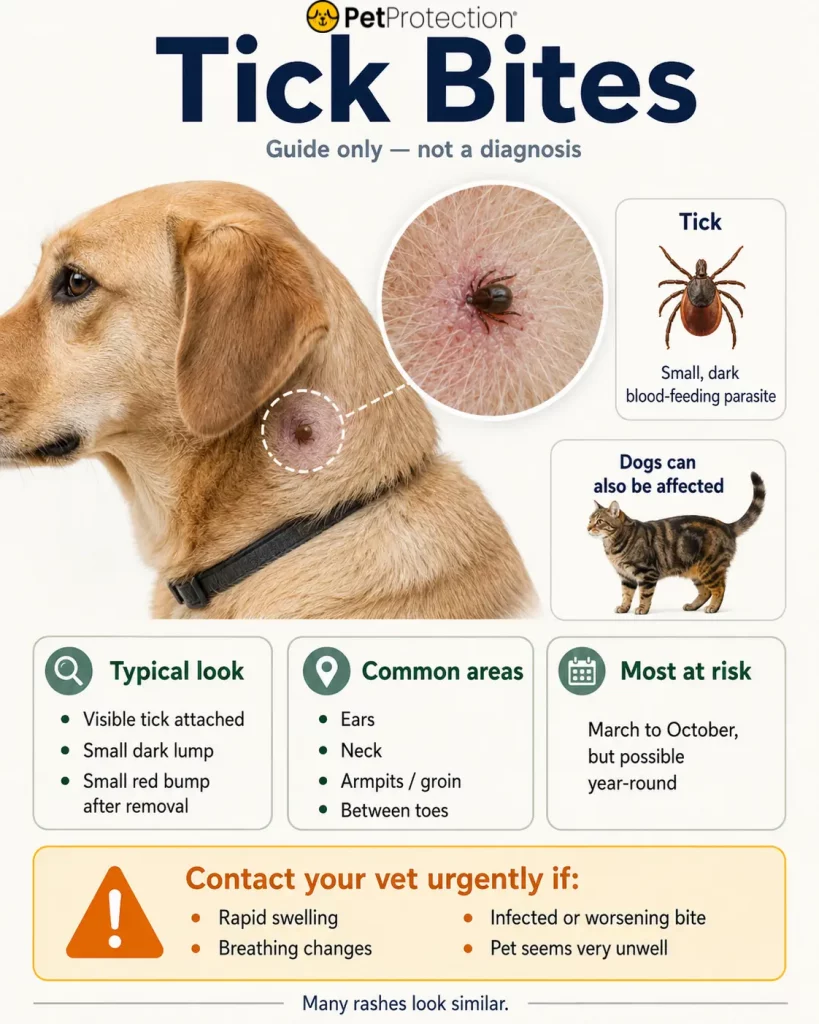
If you find a tick, remove it with a proper tick-removal tool and read their instructions carefully. The aim is to remove the whole tick without squeezing its body. Do not burn it, cover it in oil, or pull it roughly with your fingers.
After removal, clean the area gently and monitor it for redness, swelling, discharge, or signs of discomfort. Contact your vet if you cannot remove the tick fully, if the area becomes sore or infected, or if your pet seems unwell after a tick bite.
Ticks can transmit diseases, so speak to your vet about suitable tick prevention for your pet’s lifestyle and local risk.
Bee stings are most common during spring and summer, when bees are active around flowers, gardens, parks, and grassy areas. Curious dogs may snap at bees, while cats may paw at them. Pets are often stung on the paws, nose, lips, mouth, or face.
Risk is higher when pets investigate flower beds, clover lawns, fallen fruit, or areas where bees are feeding.
A bee sting may cause:
A bee may leave a sting behind in the skin.
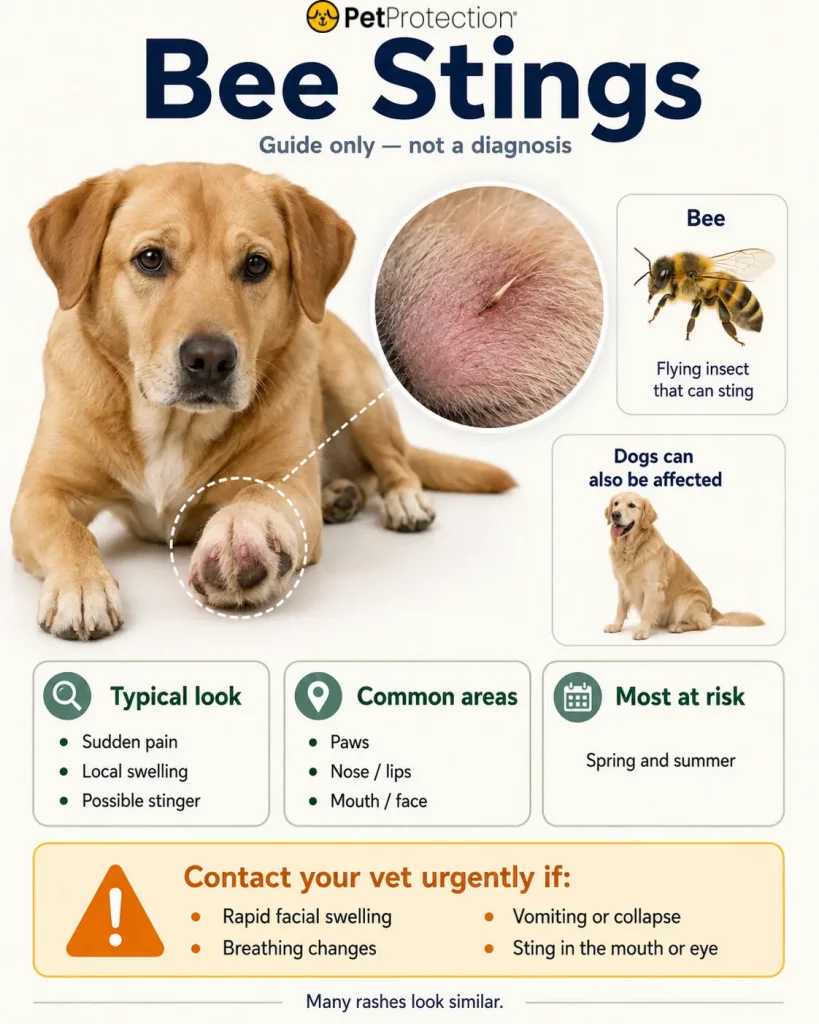
If you can see the sting, you may be able to gently scrape it away using something flat, such as the edge of a bank card. Avoid squeezing the sting with fingers or tweezers, as this may release more venom.
You can apply a cold compress wrapped in a cloth for short periods to help soothe swelling. Keep your pet calm and prevent them from licking or chewing the area.
Always contact your vet for advice if there is swelling around the face, mouth, throat, or eyes, or if your pet seems distressed. Seek emergency veterinary help if your pet has difficulty breathing, vomiting, diarrhoea, collapse, weakness, or rapid swelling. PDSA highlights these as signs of allergic reaction requiring urgent help.
Wasps are usually most active from late summer into early autumn, especially around food, bins, fallen fruit, picnic areas, and gardens. This is often when pets are more likely to be stung, particularly if they chase or snap at wasps.
Dogs may be stung while playing outside, while cats may be stung if they bat at a wasp or disturb one resting indoors.
Wasp stings can look similar to bee stings, with:
Unlike bees, wasps do not usually leave a sting behind and may sting more than once.
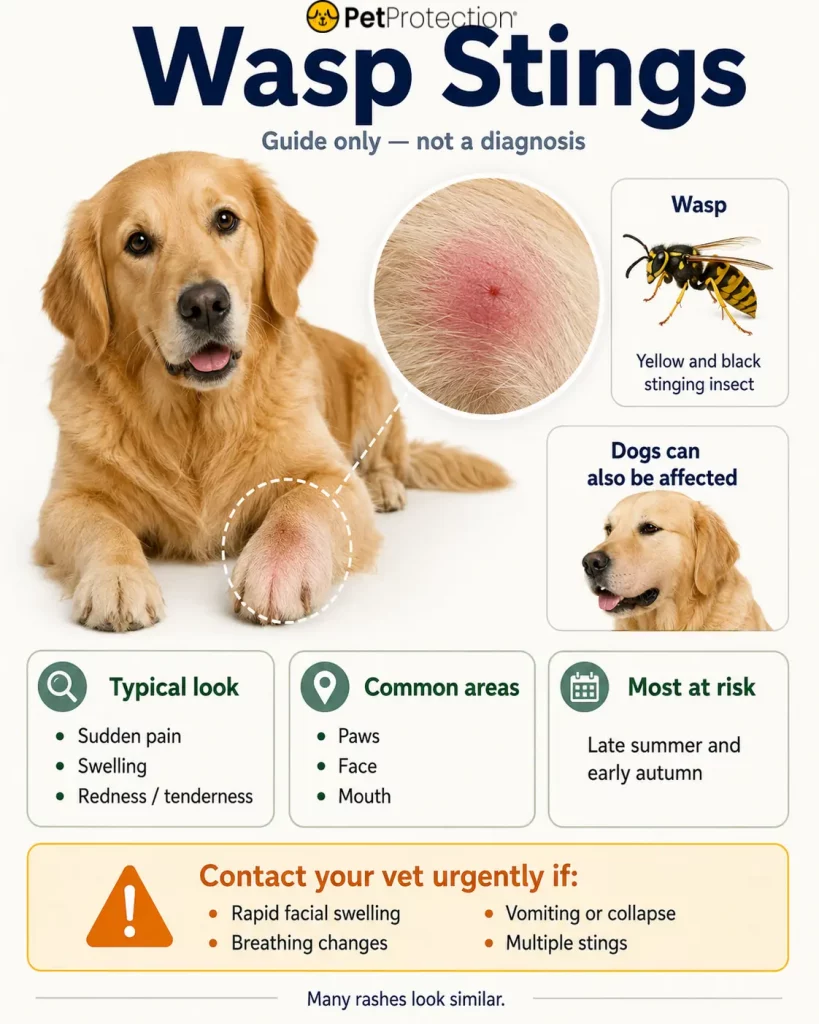
Move your pet away from the wasp and check the affected area. A cold compress wrapped in a cloth may help reduce mild swelling. Keep your pet calm and stop them licking or scratching the area.
Do not give human antihistamines or painkillers unless your vet has specifically told you to do so. Some human medicines can be harmful to pets.
Contact your vet if the swelling is significant, your pet is very uncomfortable, or the sting is near the mouth, throat, eyes, or face. Go to a vet urgently if breathing changes, vomiting, diarrhoea, collapse, weakness, hives, or rapid swelling occur.
Horseflies are usually most active in the UK during late spring and summer, especially on warm, humid days. They are commonly found around fields, woodland edges, ponds, rivers, farms, livestock, and areas where there is muck or manure, which can make them a particular nuisance during countryside walks or when pets spend time near grazing animals.
Dogs are often more at risk than cats because they are more likely to run through fields, long grass, farm tracks, and areas where horseflies are active. However, outdoor cats can also be bitten, especially if they roam near fields, stables, or livestock areas.
Horseflies are different from many smaller biting insects because their bite can be more painful. They cut the skin rather than simply piercing it, which means the bite may look larger, angrier, or more swollen than a typical midge or mosquito bite.
A horsefly bite may appear as:
Common areas affected include the belly, legs, ears, muzzle, neck, and areas with thinner fur. Some dogs may react strongly to horsefly bites, especially if they are sensitive-skinned or prone to itching and irritation.
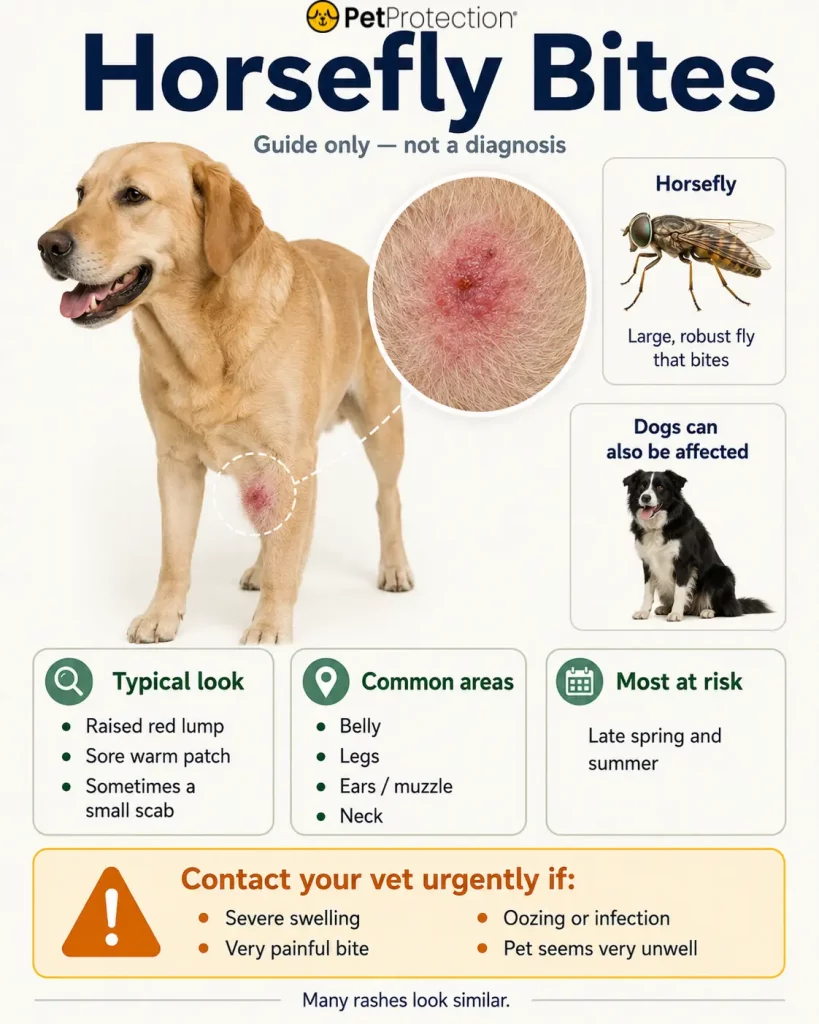
If you think your pet has been bitten by a horsefly, gently check the area and keep your pet from licking or chewing it. You can clean the area with cool, clean water and apply a cold compress wrapped in a cloth for short periods to help soothe mild swelling.
Avoid using human bite creams, essential oils, antiseptics, or pain relief products unless your vet has confirmed they are safe for your pet. Some human products can irritate pet skin or be harmful if licked.
Contact your vet if the bite becomes very swollen, hot, painful, oozy, or if your pet seems unwell. You should also seek veterinary advice if the bite is near the eye, mouth, or throat, if your pet has multiple bites, or if the area gets worse rather than better.
During horsefly season, try to avoid walking your dog through areas with lots of livestock, cow muck, standing water, or long grass during the warmest parts of the day. After countryside walks, check your pet’s coat and skin carefully, especially around the belly, legs, ears, and muzzle.
If your dog is prone to skin irritation, it may also help to keep their coat clean, support healthy skin condition, and speak to your vet about safe parasite and insect-bite prevention options.
Mosquitoes and midges are more common in late spring, summer, and early autumn, especially during warm, damp, still weather. Pets may be more at risk near:
Midges are often more active around dawn and dusk.
These bites are usually small, raised, itchy bumps. They may appear on areas with thinner fur, such as:
Some pets may barely react, while others scratch or lick repeatedly. Excessive scratching can damage the skin and increase the risk of infection.
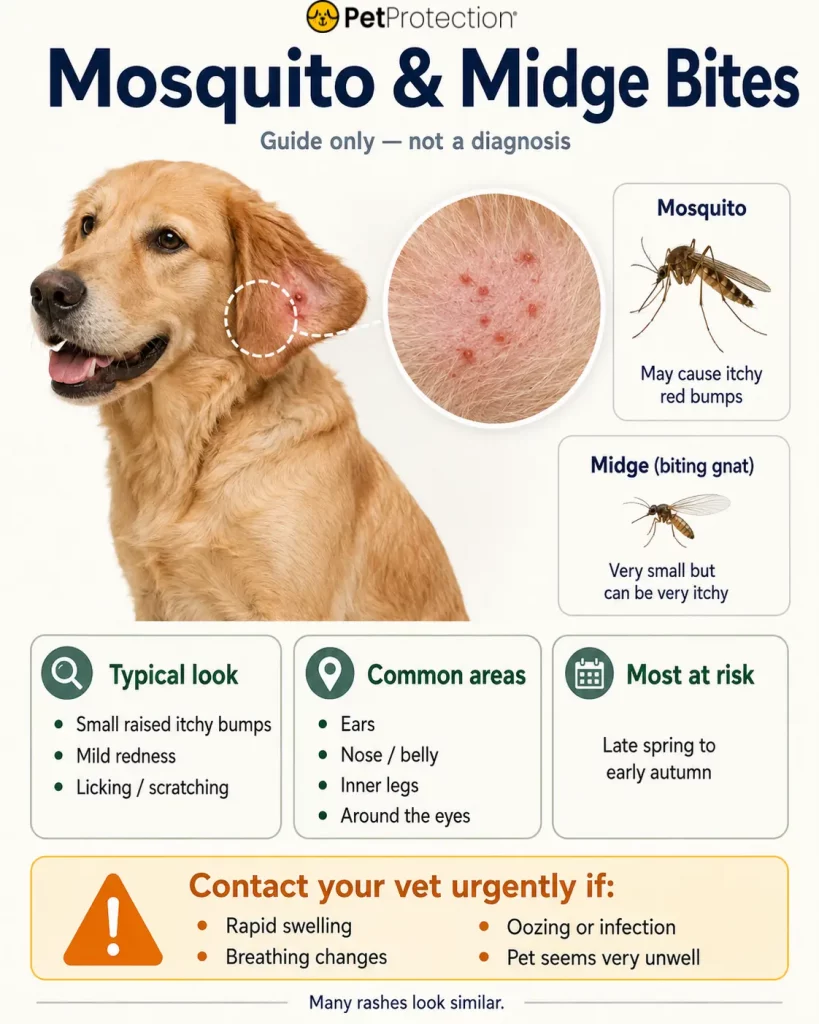
For mild bites, try to stop your pet scratching or licking the area. A cool compress may help soothe irritation. Keep the skin clean and monitor the bite over the next day or two.
Avoid using human insect creams, essential oils, or home remedies unless your vet confirms they are safe for your pet. Many products that are safe for people are not suitable for cats or dogs.
Contact your vet if the bite becomes hot, swollen, painful, oozy, scabby, or if your pet is very itchy or uncomfortable. You should also seek advice if bites keep recurring, as your pet may need help managing irritation or allergies.
Ant bites are most likely during spring and summer, when ants are active and nests are disturbed. Pets may be bitten after walking over, digging into, or lying on an ant nest.
Dogs may be more commonly affected on walks or in gardens, while cats may encounter ants while exploring outdoors.
Ant bites often appear as small red bumps or irritated patches. They are commonly seen on:
You may notice your pet suddenly licking, chewing, or lifting a paw.
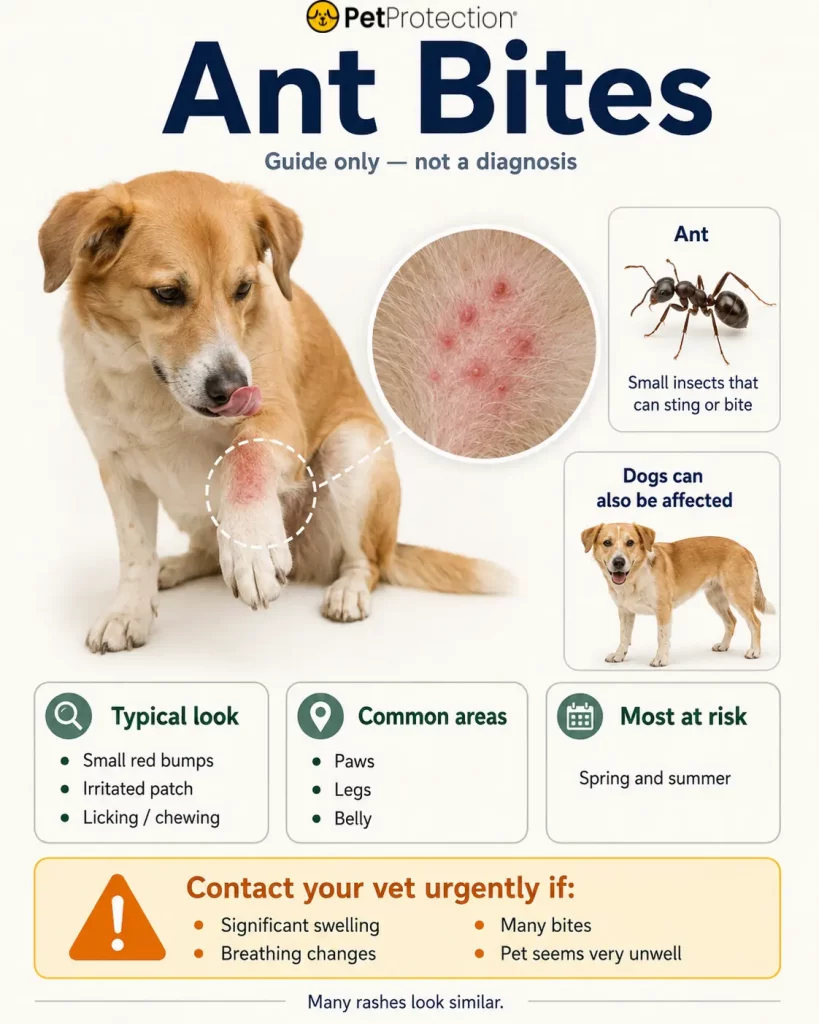
Move your pet away from the ants and gently check the affected area. If there are only a few mild bites, you can clean the skin with lukewarm water and monitor for swelling or discomfort.
Try to prevent licking, as this can make irritation worse. Do not apply human bite creams or antiseptics without veterinary guidance.
Contact your vet if your pet has multiple bites, significant swelling, ongoing pain, or signs of an allergic reaction. If the area becomes infected-looking, worsens, or your pet seems unwell, veterinary advice is needed.
Spider bites in the UK are relatively uncommon and are usually mild. They may happen at any time of year but are more likely when spiders are active in late summer and autumn, or when pets investigate sheds, garages, log piles, bedding, corners, or undisturbed areas.
A spider bite may cause:
Because spider bites can look like many other skin problems, they can be difficult to identify with certainty.
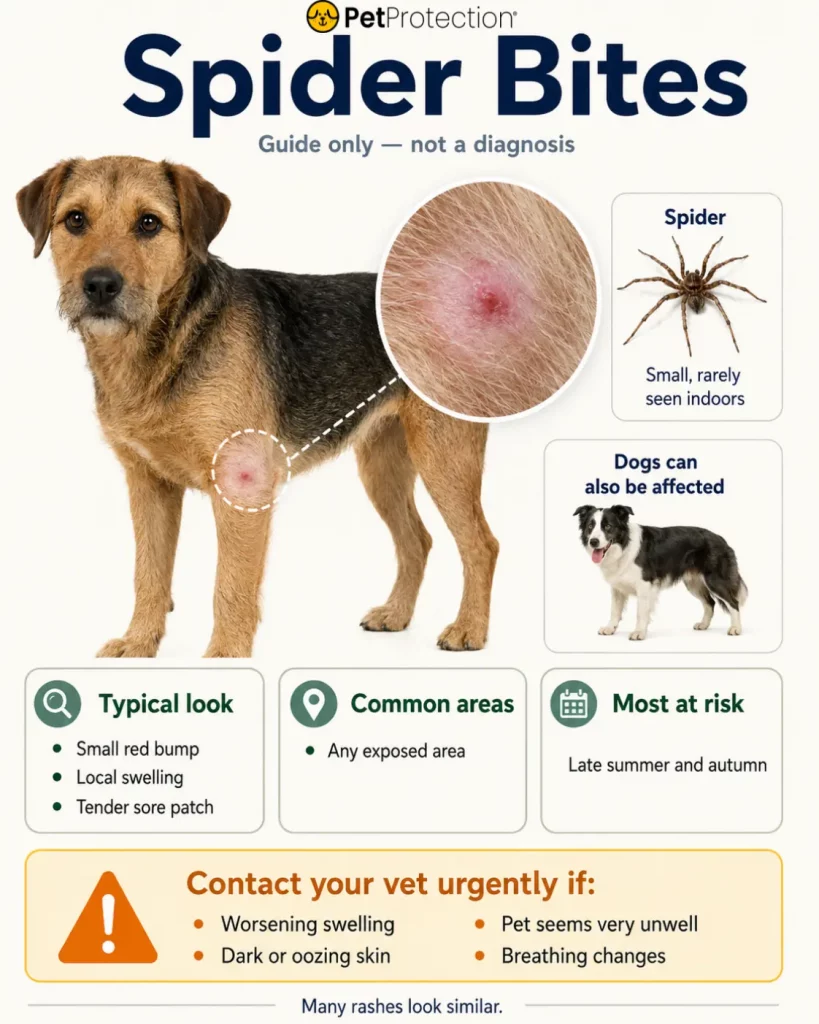
For a small, mild area, keep the skin clean and stop your pet licking or scratching. Monitor closely for changes.
Contact your vet if the swelling spreads, the area becomes painful, dark, ulcerated, oozy, or hot, or if your pet seems lethargic, feverish, or unwell. Any bite that worsens rather than improves should be checked.
Caterpillar-related irritation is more likely in spring and summer, when caterpillars are active on trees, shrubs, grass, and pathways. Some caterpillars have irritating hairs that can affect the skin, eyes, mouth, or throat.
Pets may be exposed by sniffing, licking, eating, or stepping on caterpillars. Dogs are often at higher risk because they investigate with their mouths, but cats can also be affected.
Signs may include:
If the mouth or throat is affected, irritation can become more serious.
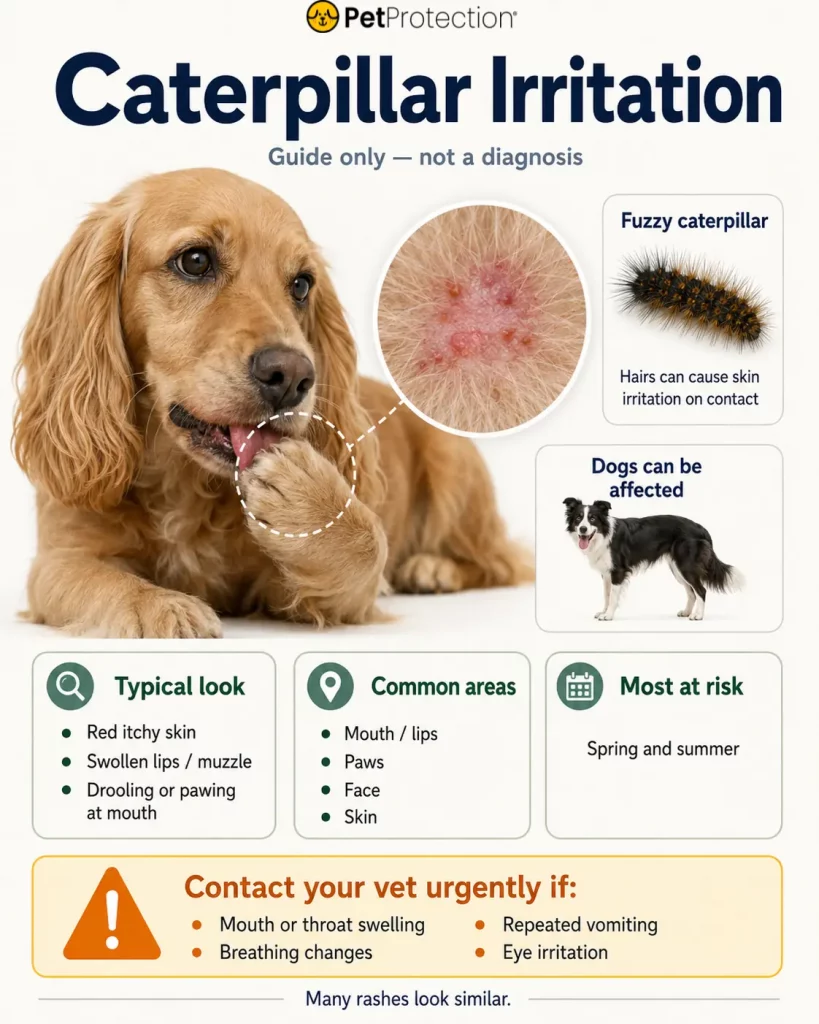
If you suspect your pet has touched, licked, or eaten a caterpillar, move them away from the area. Do not let them continue licking their paws or coat.
You can gently rinse affected paws or fur with lukewarm water if your pet allows it, but avoid rubbing harshly. If there is mouth swelling, drooling, breathing difficulty, repeated vomiting, eye irritation, or your pet seems distressed, contact your vet urgently.
Harvest mites are most commonly seen in late summer and autumn, particularly in grassy, chalky, or rural areas. They can affect cats and dogs, especially around the paws, ears, face, and belly.
Harvest mites can cause intense itching. You may see:
They can be especially irritating, and pets may scratch enough to damage their skin.
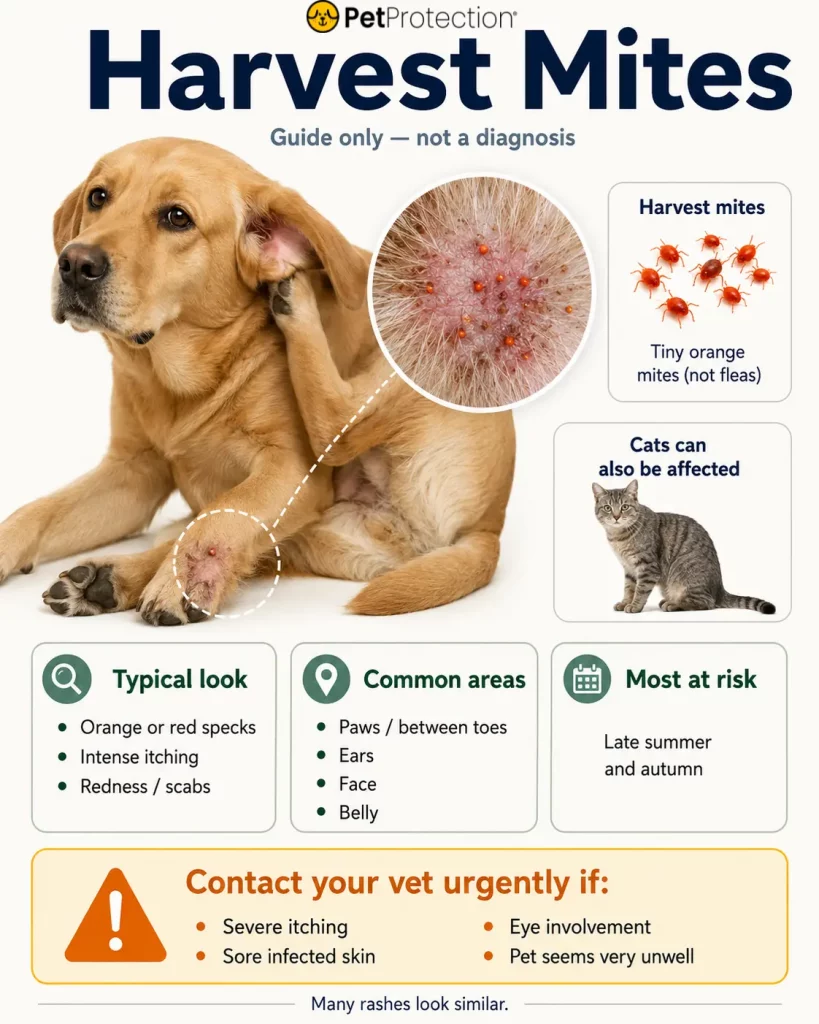
If you suspect harvest mites, avoid letting your pet keep licking or scratching the area. Your vet can confirm whether mites are present and recommend a suitable treatment.
Do not use over-the-counter insecticides or home remedies without veterinary advice, particularly on cats, as they are sensitive to many chemicals.
See your vet if your pet is very itchy, has sore skin, develops scabs, or the irritation does not settle.
You should contact your vet immediately if your pet shows any of the following:
PDSA recommends urgent veterinary attention if dogs show allergic reaction signs after bites or stings, especially rapid swelling, breathing problems, collapse, vomiting, or diarrhoea.
For more general advice on bites, stings and allergic reactions in pets, you can also read the PDSA guide to insect bites and stings in dogs. https://www.pdsa.org.uk/search?q=insect+bites
| Bite or Sting | Highest Risk Period in the UK | Common Areas Affected |
|---|---|---|
| Fleas | Year-round, often worse from spring to autumn and in heated homes | Tail base, belly, groin, neck |
| Ticks | March to October, but possible year-round | Ears, neck, armpits, groin, toes |
| Bee stings | Spring and summer | Paws, nose, lips, mouth |
| Wasp stings | Late summer and early autumn | Paws, face, mouth |
| Mosquitoes and midges | Late spring to early autumn | Ears, belly, nose, inner legs |
| Horsefly bites | Late spring to summer, especially on warm, humid days | Belly, legs, ears, muzzle, neck, thinner-furred areas |
| Ant bites | Spring and summer | Paws, legs, belly |
| Spider bites | Late summer and autumn, but possible year-round | Any exposed area |
| Caterpillar irritation | Spring and summer | Mouth, paws, face, skin |
| Harvest mites | Late summer and autumn | Paws, ears, face, belly |
You cannot prevent every bite or sting, but you can reduce your pet’s risk by:
Bites and stings can cause temporary irritation, but some dogs are naturally more prone to itching, scratching, paw licking, redness, and sensitive skin. While supplements are not a replacement for veterinary care or prescribed flea, tick, or allergy treatment, daily nutritional support can form part of a wider routine to help maintain skin comfort, coat condition, and overall well-being.
At PetProtection™, we offer a range of soft chews designed to support dogs from the inside out.
Our PetProtection™ Flea & Tick Chews for Dogs are designed as a daily supplement to support normal skin and coat condition while helping your dog maintain everyday comfort.
Formulated with selected ingredients including flax seed meal, brewer’s yeast, colostrum, coriander, neem, sunflower lecithin, perilla seed extract, and B vitamins, these chews are ideal for pet parents looking to support their dog’s skin health as part of a regular wellness routine.
They may be especially useful during spring, summer, and early autumn, when dogs are more likely to encounter fleas, ticks, and biting insects outdoors.
Learn more here: PetProtection™ Flea & Tick Chews for Dogs https://pet-protection.org/flea-tick-chews-for-dogs/
If your dog is already experiencing regular itching, scratching, licking, or general skin discomfort, our PetProtection™ Itch Relief Chews for Dogs may be a helpful addition to their daily routine.
These chews are formulated to support skin and coat health, immune balance, and comfort from within. With ingredients including colostrum, astragalus root, and organic turmeric, they are designed for dogs who need extra support with itchy or irritated skin.
They can be particularly useful for dogs who seem more uncomfortable during seasonal changes, after outdoor adventures, or when environmental irritants are more common.
Learn more here: PetProtection™ Itch Relief Chews for Dogs https://pet-protection.org/itch-relief-chews-for-dogs/
For dogs who are sensitive to seasonal, environmental, or food-related triggers, our PetProtection™ Allergy Relief Chews for Dogs are designed to support skin comfort, immune function, and general wellbeing.
These chews include ingredients such as colostrum, astragalus root, organic turmeric, omega-3 fatty acids, and apple cider vinegar, helping support dogs who experience scratching, licking, paw chewing, or irritated skin linked to sensitivities.
They are a good option for pet parents looking to support their dog during high-pollen months, seasonal changes, or periods when itching and irritation seem to flare up.
Learn more here: PetProtection™ Allergy Relief Chews for Dogs https://pet-protection.org/allergy-relief-chews-for-dogs/
If your dog has a sudden bite, sting, swelling, rash, broken skin, infection, hair loss, or severe itching, it is always best to speak to your vet. Supplements can help support skin and coat health, but they should not be used as a substitute for veterinary diagnosis or treatment when a problem looks painful, serious, or is getting worse.
Bites and stings are common in cats and dogs, especially during warmer months in the UK. Most mild bites cause temporary redness, itching, or swelling, but some can become more serious, particularly if your pet has an allergic reaction, develops an infection, or continues licking and scratching the area.
The best approach is to check your pet regularly, act early, and contact your vet if anything looks unusual, painful, infected, or is getting worse. When it comes to your pet’s comfort and safety, it is always better to ask for advice sooner rather than later.
Please note: These images are for general guidance only. Bites, stings, allergies, rashes, infections, mites, and skin conditions can look very similar. If your pet is in pain, swelling quickly, breathing differently, vomiting, collapsing, or the area looks infected or gets worse, contact your vet immediately.
Not sure what you’re seeing? Take a clear photo, stop your pet licking or scratching where possible, and contact your vet for advice as soon as possible.
© PetProtection® Images and guides are for general information only and may not be copied or reproduced without permission.
Many pet owners know dogs have an incredible sense of smell, but did you know dogs see UV light, or

A practical UK guide to common plants, flowers, trees, berries and fungi that can be dangerous to dogs and cats,
A practical UK guide to common insect bites and stings on dogs and cats, including fleas, ticks, bees, wasps, horseflies,

Natural supplements for dogs and cats can help support digestion, joint mobility, skin health, immunity, and emotional balance. This guide

Wondering what supplements are best for your dog at different ages? This guide explains which supplements can help support healthy


Signs your dog needs supplements aren’t always obvious, but understanding them can help support long-term health and well-being. Most pet

Supporting your dog’s digestive health is essential for overall wellbeing. Probiotics and prebiotics help maintain a balanced gut microbiome, improving

Dogs with sensitive stomachs need gentle, consistent digestive support. This guide explores the best supplements to help improve gut balance,

What does “fortified” really mean in pet supplements? This article explains how fortification works, why it matters for dogs and

Goat’s milk is a gentler, more digestible alternative to cow’s milk for pets. Naturally rich in bioavailable nutrients and lower

Discover why seaweed is becoming a popular ingredient in pet dental care. Learn how seaweed dental powder helps reduce plaque

Learn how fortified goat’s milk powder provides gentle digestion, immune support, and complete nutrition for dogs and cats.