

Can Dogs See UV Light? The Hidden World Your Dog May Be Seeing
Many pet owners know dogs have an incredible sense of smell, but did you know dogs see UV light, or
Order before 3pm and we ship the same day
Your cart information will not be stored on our servers
Take advantage of our multibuy discounts
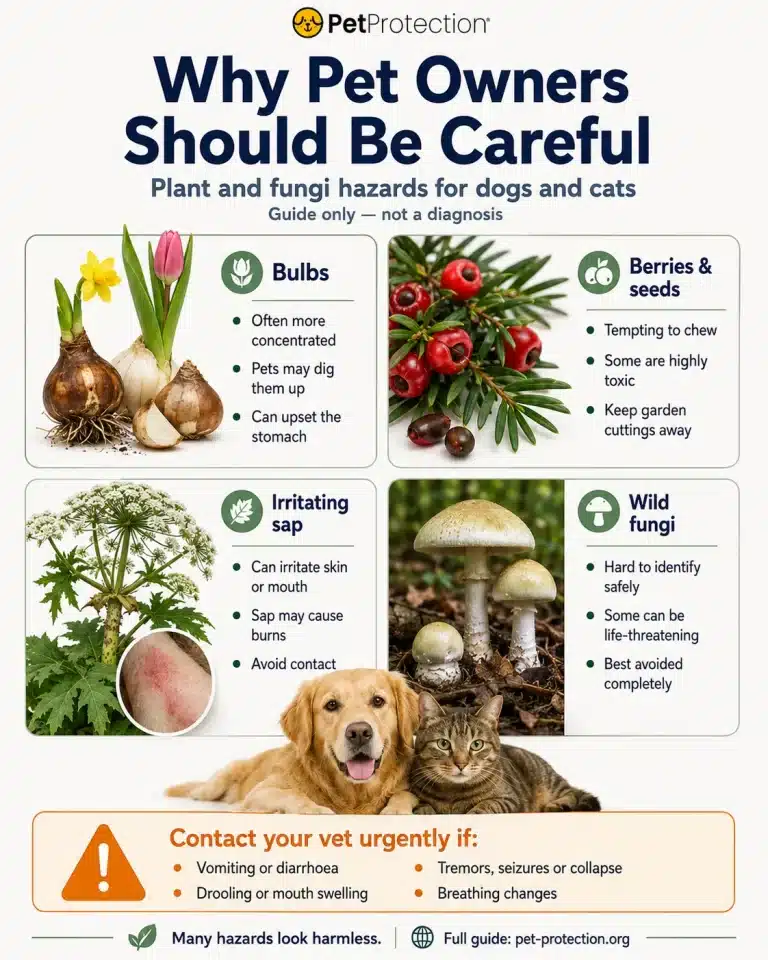
Many of the plants we love in UK gardens, homes and parks can be harmful to pets. Some cause only a mild upset stomach, while others can lead to far more serious problems. Cats are especially vulnerable to true lilies, which can cause kidney failure, and both dogs and cats can run into trouble with bulbs, berries, leaves, sap, seeds and wild fungi. If you think your pet may have eaten a dangerous plant or mushroom, it’s best to contact your vet straight away rather than waiting for symptoms to appear.
This guide covers common UK plants poisonous to dogs and cats, including garden plants, houseplants, berries, bulbs and wild fungi. This isn’t a complete list, but it covers a lot of the more common UK plants with risks highlighted by Blue Cross and PDSA.
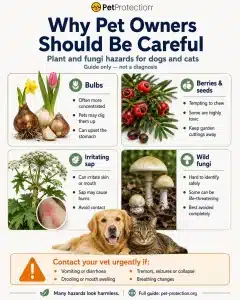
Plant toxicity can be surprisingly unpredictable. Not all pets react in the same way, and not every part of every plant is equally dangerous. In many cases, the bulbs, berries, seeds or sap are more toxic than the leaves or stems. PDSA also notes that some plants irritate the skin or mouth rather than being dangerous only when swallowed. Wild mushrooms are another risk because they can be very hard to identify safely, so the safest approach is to avoid them completely.
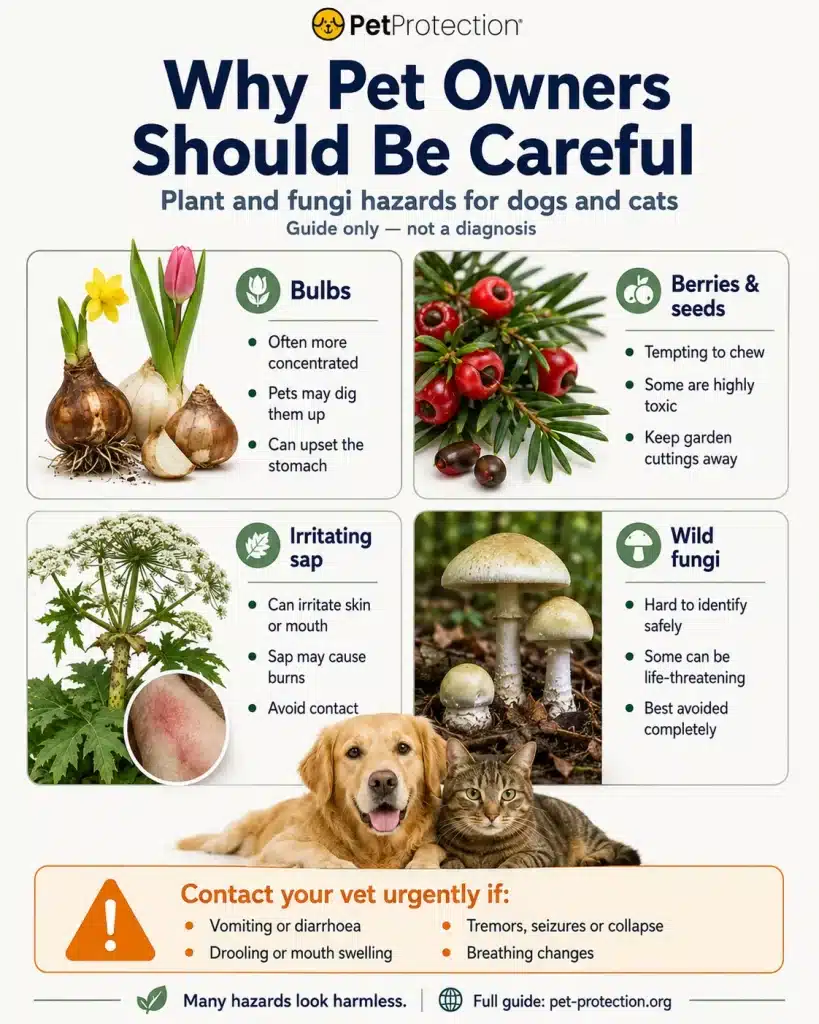
Common signs can include:
If your pet is showing severe symptoms such as breathing trouble, seizures, collapse, or sudden weakness, contact a vet urgently. PDSA and Blue Cross both advise getting veterinary advice even if you didn’t actually see your pet eat the plant, because symptoms may be the first clue that something is wrong. https://www.pdsa.org.uk/pet-help-and-advice/pet-health-hub/other-veterinary-advice/first-aid-for-collapsed-pets
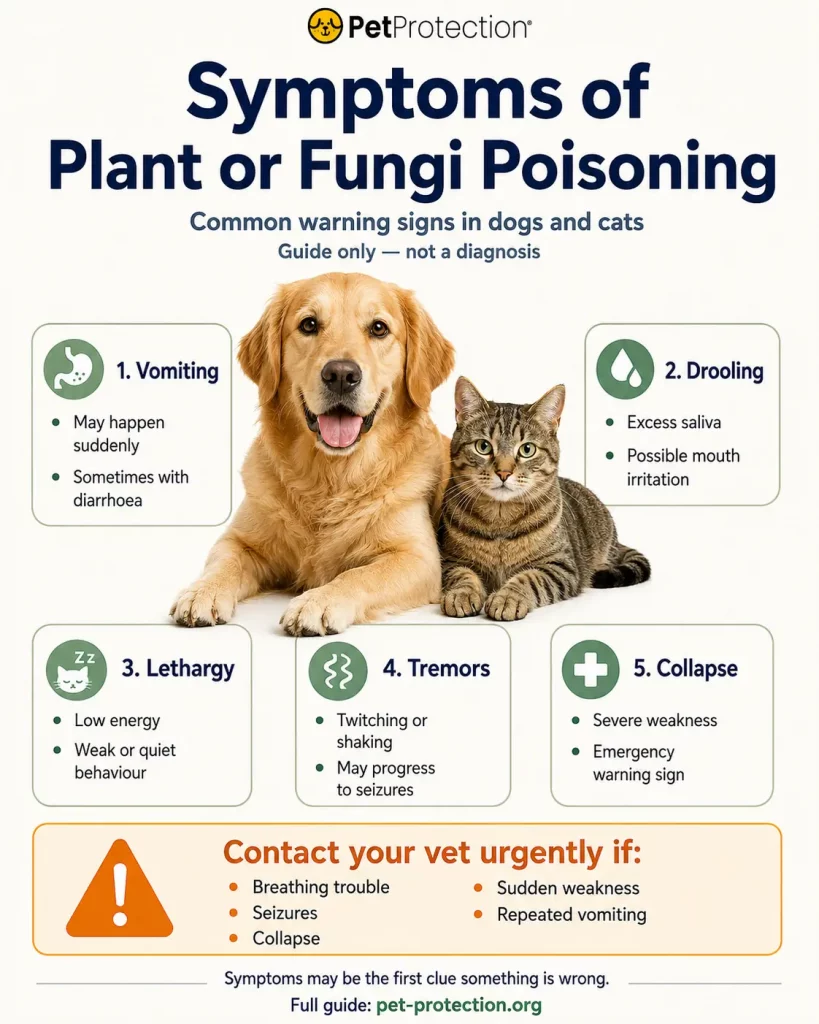
True lilies (Lilium species) and day lilies (Hemerocallis species) are among the most dangerous plants for cats. Every part of the plant should be treated as unsafe, including the petals, leaves, stems, pollen and even water from a vase. Cats may be exposed by chewing the plant, brushing against pollen and then grooming it from their fur, or drinking from a vase. If you think your cat has been near, licked, chewed or eaten any part of a lily, contact your vet immediately — do not wait for symptoms to appear.
That is clear, practical and not too close to the wording from Blue Cross or PDSA.
You could add this under the paragraph:
Possible symptoms of lily poisoning in cats can include vomiting, drooling, loss of appetite, tiredness, weakness, increased thirst, changes in urination, dehydration, tremors, seizures or collapse. Early signs may appear within hours, while signs of kidney damage can develop later, so urgent veterinary advice is needed even if your cat seems normal at first.
PDSA says lily exposure can cause kidney damage in cats, which can lead to kidney failure and death if untreated, while the FDA notes early signs can include decreased activity, drooling, vomiting and loss of appetite, with signs of kidney damage developing later.
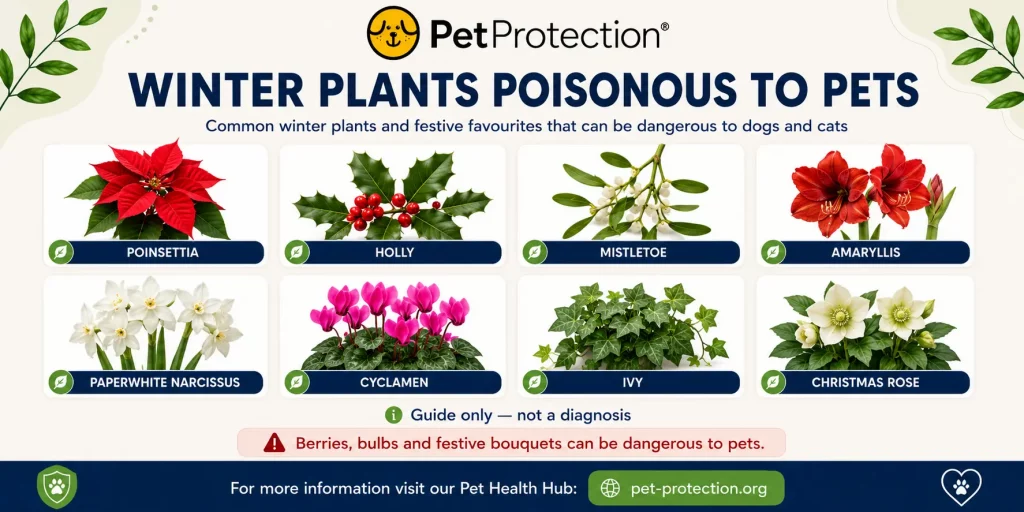
Winter can bring extra plant hazards into the home and garden, especially around Christmas. Festive plants, berries, bulbs and bouquets may look harmless, but some can cause stomach upsets, mouth irritation or more serious symptoms in dogs and cats. If you think your pet has eaten a poisonous plant, it is always best to contact your vet for advice rather than waiting to see what happens. PDSA advises calling your vet straight away if you see your pet eating a potentially dangerous plant.
Symptoms may not appear straight away, so if you know or suspect your pet has eaten part of a risky plant, call your vet for advice even if they currently seem fine. PDSA lists symptoms of plant poisoning including vomiting, diarrhoea, drooling, tremors, seizures, breathing difficulty and collapse.
It is not just potted plants that can be risky. Wreaths, table decorations, cut flowers, berries and fallen leaves can all tempt curious pets. Cats may brush against flowers and later groom pollen from their fur, while dogs may chew berries, bulbs or stems. PDSA notes that seeds, bulbs and berries can often be more toxic than stems, and that pets may dig up bulbs from underground.
Keep festive plants and bouquets out of reach, avoid leaving fallen berries or leaves on the floor, and do not let pets drink from vases or plant saucers. If you are unsure whether a plant is safe, place it somewhere your pet cannot access or choose a pet-safe alternative.
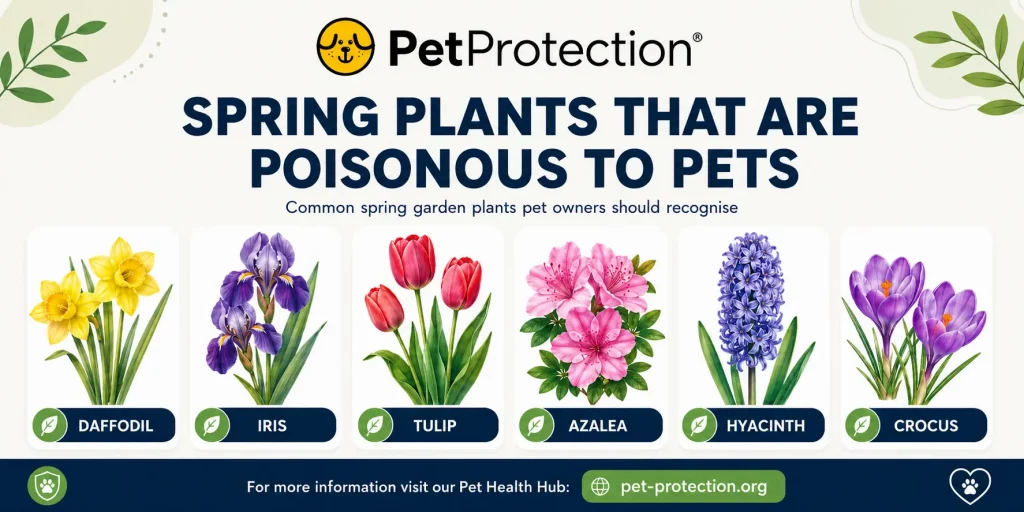
Spring gardens can look beautiful, but many popular spring bulbs and flowers can be risky for dogs and cats. Pets may dig up bulbs, chew leaves or nibble fallen flowers, especially in gardens, parks and planted borders. Bulbs are often the biggest concern because they can be more concentrated than the visible parts of the plant. Even if a plant only causes mild stomach upset in some pets, others may react more seriously, so it is safest to keep pets away from spring plants you are unsure about.
These plants may cause stomach upset, drooling and mouth irritation, but some can be much more serious. PDSA specifically lists autumn crocus among the more dangerous plants for pets, and Blue Cross includes several of the others in its dog and cat plant guidance.
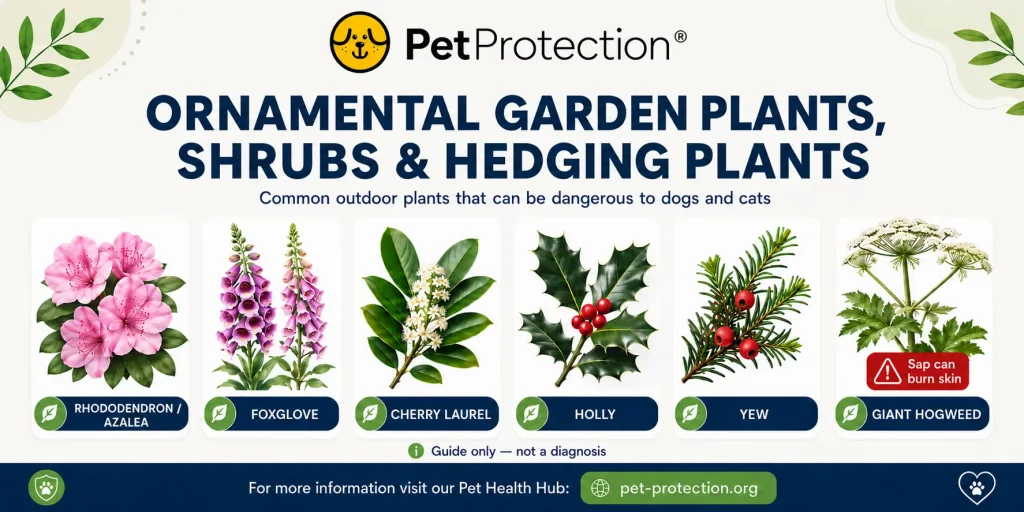
Ornamental garden plants, shrubs and hedging plants are easy to overlook because many are simply part of everyday gardens, driveways, borders and public spaces. However, some can be risky if pets chew the leaves, flowers, berries, seeds or cut stems. Dogs may investigate hedge cuttings or fallen berries, while cats may brush against plants or nibble leaves. Extra care is needed after pruning, because fresh cuttings from plants such as laurel, yew or holly may end up on the ground where pets can reach them.
Some ornamental plants are risky because of their leaves, flowers or berries, while hedging plants can also become a problem when cuttings are left on the ground. Giant hogweed deserves special care because its sap can burn or blister skin, including on thinner-furred areas such as the ears, belly and around the mouth. If your pet chews, licks or brushes against a plant you are unsure about, contact your vet for advice.
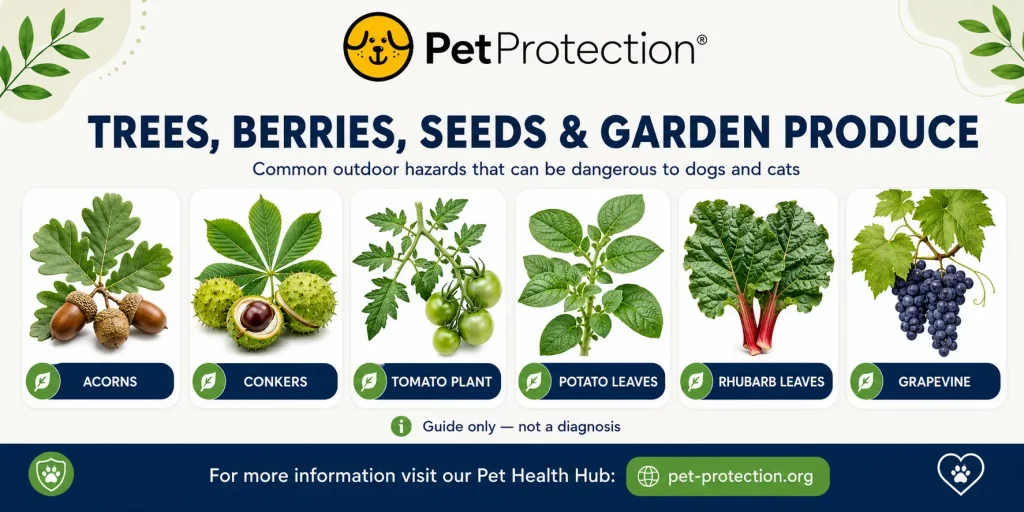
Some plant hazards come from trees, hedges and edible garden plants rather than flowers. Acorns, conkers, berries, leaves, stems, unripe fruit and plant bulbs can all cause problems if chewed or swallowed. Dogs may be especially tempted by fallen seeds, berries or windfall fruit during walks or in the garden, while curious cats may nibble leaves or brush against plants. Larger items such as conkers and acorns may also pose a choking or blockage risk, so it is safest to keep pets away from anything you cannot confidently identify as safe.
PDSA highlights that onions and garlic are dangerous at all stages, while tomato plants, potato plants, rhubarb leaves, acorns and conkers can also cause problems. Blue Cross also notes conkers and acorns as common seasonal risks for dogs, including the risk of gut blockage if swallowed.
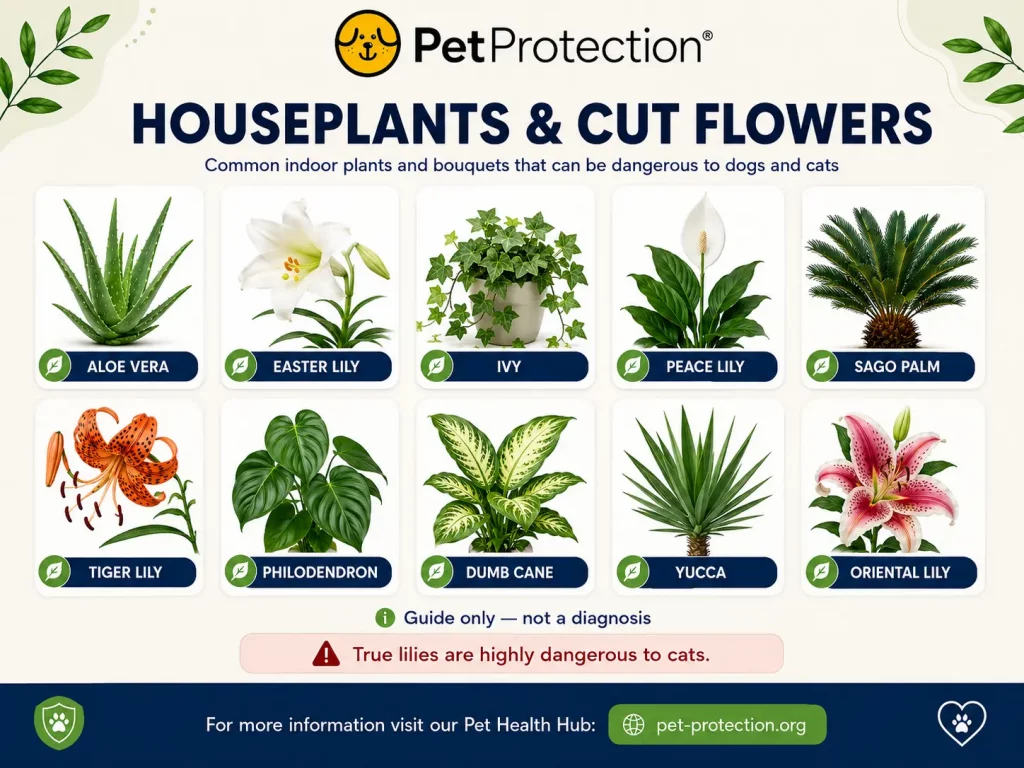
Indoor plants can be easy to overlook because they feel “safe” inside the home, but many common houseplants and bouquets can still be risky for dogs and cats. Pets may chew leaves, dig in plant pots, drink from the vase water, or brush against flowers and later groom pollen from their coat. This is especially important with true lilies, which are highly dangerous to cats even in small amounts. If you are unsure whether a plant is safe, it is best to keep it well out of reach or choose a pet-safe alternative.
For cats, Blue Cross specifically lists true lilies and day lilies as the major emergency, and also includes plants such as cordyline, dracaena, cyclamen, foxglove, oleander, peace lily, poinsettia, tulips and yucca among the plants that can cause problems.
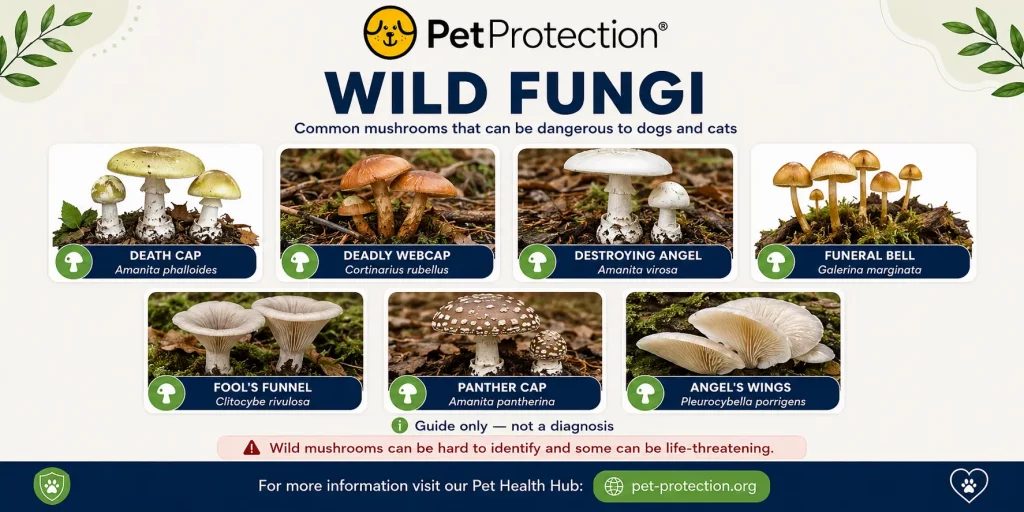
Wild mushrooms and toadstools are a concern for dog and cat owners because many species are difficult to identify safely. Some fungi may only cause stomach upset, but others can lead to serious symptoms, including tremors, seizures, abnormal heart rhythm, organ damage or collapse. Dogs are often at higher risk because they may sniff, chew or eat mushrooms while walking in woodland, parks, grass verges or damp garden areas. Because identification is so difficult, the safest approach is to treat any wild mushroom or toadstool as potentially unsafe and keep pets away from it.
Vets now says these are among the most poisonous mushrooms found in the UK. Because safe identification is difficult, a sensible message for readers is: if it’s a wild mushroom or toadstool, assume it may be unsafe and keep your dog or cat away from it.
If you think your dog or cat has chewed, licked or swallowed a plant, flower, berry, bulb or wild mushroom, do not wait for symptoms to appear. Some poisons can act quickly, while others may cause problems later. PDSA advises contacting your vet straight away if you suspect your pet has eaten something they should not have.
What to do straight away:
If it is outside your vet’s normal opening hours, call their usual number first, as most practices give details for their out-of-hours emergency service. You can also contact Animal PoisonLine on 01202 509000, a UK 24-hour triage service run by the Veterinary Poisons Information Service for pet owners worried about possible poisoning.
For urgent treatment, contact your own vet or your nearest emergency vet clinic. Vets Now also advises calling your vet or nearest emergency clinic immediately if you are worried your pet has been poisoned.
Important: email or online contact forms are not suitable for poisoning emergencies. Animal PoisonLine states that poisoning advice cannot be given through their feedback/contact page and that worried owners should call directly.
Guide only — not a diagnosis. If in doubt, call a vet. It is always better to ask early than wait and risk symptoms becoming more serious.
Yes. If you have pets, it’s wise to avoid planting known toxic species where possible, keep bulbs and berries out of reach, clear up hedge cuttings, and monitor pets in the garden. Blue Cross suggests that for dogs, growing your own vegetables can be a better option than letting them chew random plants, while cats may enjoy safe options such as catnip or catmint rather than access to potentially harmful plants.
Most pets won’t eat large amounts of plants, but curious dogs, puppies, outdoor cats and nibbling kittens can still get into trouble. The safest approach is to learn the main risks, especially seasonal bulbs, berries, common houseplants and wild mushrooms. And because no list is ever complete, it’s best to see this as a guide rather than a full database. If in doubt, contact your vet promptly.
For everyday well-being, you can browse our range of dog and cat supplements. Please note, supplements are not a treatment for poisoning — contact your vet urgently if your pet may have eaten a toxic plant or fungus. https://pet-protection.org/
Copyright notice: This guide has been created by PetProtection™ for general pet owner information. Please do not copy, reproduce or republish this content without written permission from PetProtection.
Many pet owners know dogs have an incredible sense of smell, but did you know dogs see UV light, or
A practical UK guide to common plants, flowers, trees, berries and fungi that can be dangerous to dogs and cats,
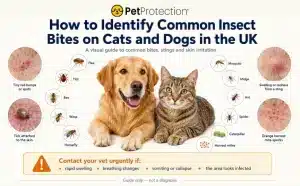
A practical UK guide to common insect bites and stings on dogs and cats, including fleas, ticks, bees, wasps, horseflies,

Natural supplements for dogs and cats can help support digestion, joint mobility, skin health, immunity, and emotional balance. This guide
Wondering what supplements are best for your dog at different ages? This guide explains which supplements can help support healthy


Signs your dog needs supplements aren’t always obvious, but understanding them can help support long-term health and well-being. Most pet
Supporting your dog’s digestive health is essential for overall wellbeing. Probiotics and prebiotics help maintain a balanced gut microbiome, improving
Dogs with sensitive stomachs need gentle, consistent digestive support. This guide explores the best supplements to help improve gut balance,
What does “fortified” really mean in pet supplements? This article explains how fortification works, why it matters for dogs and

Goat’s milk is a gentler, more digestible alternative to cow’s milk for pets. Naturally rich in bioavailable nutrients and lower

Discover why seaweed is becoming a popular ingredient in pet dental care. Learn how seaweed dental powder helps reduce plaque

Learn how fortified goat’s milk powder provides gentle digestion, immune support, and complete nutrition for dogs and cats.